
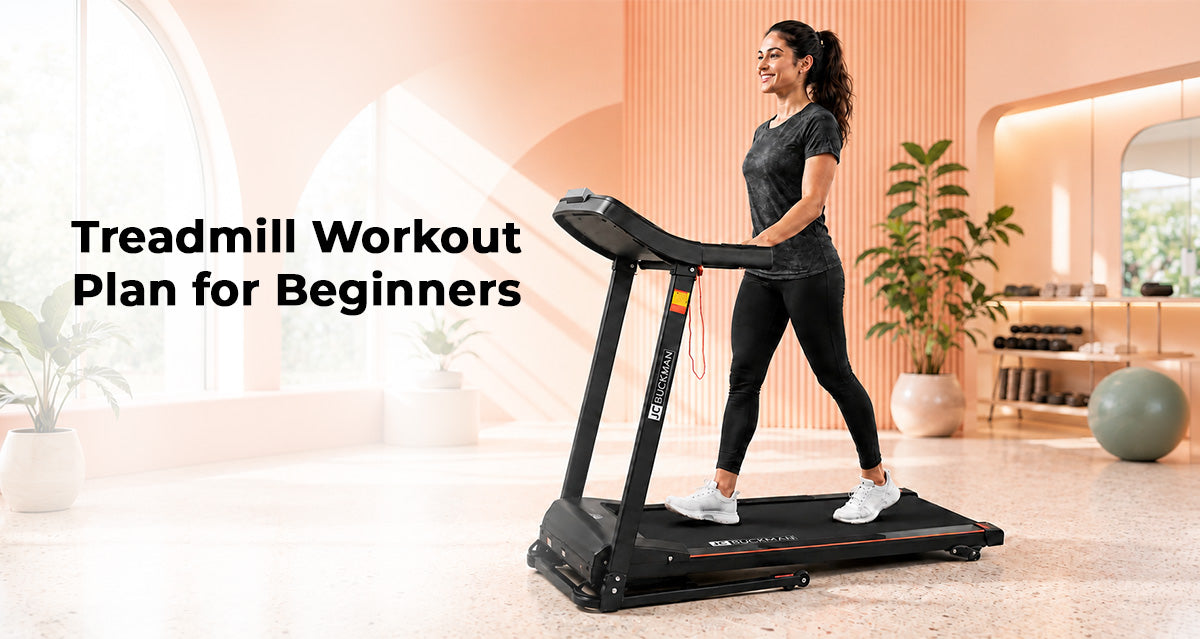
Treadmill Workout Plan for Beginners
Starting a treadmill workout can feel confusing for beginners. How fast should you walk, how long should you exercise, and when should you use an incline?
The key is to start slowly and increase intensity gradually. A simple treadmill workout plan for beginners can help build stamina, improve fitness, and make exercise a consistent part of your routine.
Why Is a Treadmill Good for Beginners?
 A treadmill provides a controlled environment where beginners can easily manage their speed, workout duration, and intensity.
Unlike outdoor walking or running, you don't have to deal with traffic, uneven surfaces, extreme weather, or unfamiliar routes. You can simply start at a comfortable pace and adjust your workout as your fitness improves.
A treadmill is also useful for people who are returning to exercise after a long break. You can begin with short walking sessions and gradually introduce faster walking, jogging, and incline training.
How Long Should a Beginner Walk on a Treadmill?
Beginners can start with around 20–30 minutes per workout, depending on their current fitness level.
You don't need to exercise for an hour immediately. The goal during the first few weeks is to develop consistency rather than maximum intensity.
For example, if you're completely new to exercise, start with 15–20 minutes and gradually work toward 30 minutes as your body becomes comfortable with regular movement.
Beginner Treadmill Workout Plan
A structured plan makes it easier to stay consistent because you know exactly what to do during each session.
Week 1: Get Comfortable
During your first week, focus on comfortable walking rather than speed.
Start with 5 minutes of easy walking to warm up. Continue with 10–15 minutes at a comfortable pace where you can still speak without becoming excessively breathless.
Finish with another 5 minutes of slower walking to bring your workout to an easy conclusion.
Goal: Build the habit of exercising and become familiar with treadmill controls.
Week 2: Increase Walking Time
Once you're comfortable with the treadmill, increase your workout duration.
Begin with 5 minutes of easy walking. Then walk at a slightly faster pace for 15–20 minutes. Finish with 5 minutes at a slower speed.
If you feel comfortable, introduce a short period of faster walking during the middle of your workout.
Goal: Improve endurance without making the workout unnecessarily difficult.
Week 3: Add Intervals
Now you can introduce simple walking intervals.
After warming up, alternate between a comfortable walking pace and a faster pace. For example, walk comfortably for 2 minutes, then increase your speed for 1 minute before returning to your normal pace.
Repeat this pattern several times.
Goal: Teach your body to handle changes in exercise intensity.
Week 4: Introduce Light Jogging
If brisk walking feels comfortable and you have no health or injury concerns, you can introduce short jogging intervals.
Try walking for 3 minutes followed by 1 minute of light jogging. Repeat this sequence throughout your workout.
Don't worry about how fast you're running. Focus on maintaining good posture and controlled movement.
Goal: Gradually transition from walking to jogging.
What Speed Should Beginners Use?
There is no single perfect treadmill speed for every beginner. Your ideal speed depends on your current fitness level, walking ability, age, and comfort.
Start at a pace where you can maintain control and speak comfortably. As your fitness improves, gradually increase the speed.
A common mistake is trying to copy someone else's speed. Your workout should challenge you without making you lose control or feel excessively exhausted.
Should Beginners Use Incline?
Yes, but beginners should introduce incline gradually.
Walking on an incline increases workout intensity without requiring you to run faster. However, there's no need to start with a steep incline.
Begin with a low incline when you feel comfortable with regular walking. As your endurance improves, you can experiment with different incline levels.
If you notice that your posture changes or you're holding tightly onto the handrails, reduce the incline or speed.
How Often Should Beginners Use a Treadmill?
For most beginners, three to four treadmill sessions per week can provide a practical starting routine.
Avoid thinking that you need to exercise every day to make progress. Rest and recovery are also important, particularly when your body isn't accustomed to regular exercise.
For example, you could schedule workouts on Monday, Wednesday, Friday, and optionally Saturday. This gives your body recovery time between sessions.
A Simple 30-Minute Treadmill Workout
Once you're comfortable with basic walking, you can use this simple structure:
- 5 minutes – Warm-up: Start with slow, comfortable walking.
- 10 minutes – Steady walking: Increase the speed to a comfortable but purposeful walking pace.
- 5 minutes – Faster intervals: Alternate between normal and faster walking.
- 5 minutes – Comfortable walking: Return to a moderate pace.
- 5 minutes – Cool-down: Gradually reduce your speed.
This workout is simple enough for beginners while giving you opportunities to gradually improve your endurance.
How Can a JC Buckman Treadmill Help Beginners?
 A beginner-friendly treadmill should make it easy to control speed, monitor progress, and adjust workout intensity.
The JC Buckman V-Jog Treadmill is designed for home workouts and provides a speed range of 1–12 km/h, allowing users to start with slow walking and gradually progress toward faster walking or jogging.
Its CUSHION STEP technology uses a multi-layer, non-slip running belt designed to reduce impact during workouts. This can make regular walking more comfortable for beginners.
The V-Jog also includes 3 manual incline levels, 12 preset workout programs, and 3 training modes, giving users different ways to vary their workouts as their fitness develops.
Its digital LCD display tracks speed, distance, calories, time, and heart rate, helping beginners monitor their workout without needing complicated equipment.
How Can You Stay Motivated?
The biggest challenge for many beginners isn't the treadmill itself, it's staying consistent.
Set small goals instead of expecting dramatic changes immediately. For example, your first goal could simply be completing three workouts in one week.
You can also listen to music, podcasts, or watch something enjoyable while walking. Tracking your workout duration and gradually increasing your walking distance can make your progress easier to see.
Ask yourself: Can I improve slightly this week without making my workout uncomfortable?
That mindset is more sustainable than trying to achieve maximum performance every session.
Common Treadmill Mistakes Beginners Should Avoid
Beginners often make the mistake of increasing speed or workout duration too quickly.
Avoid starting every workout at maximum intensity. Your body needs time to adapt to regular exercise.
Also avoid holding the handrails throughout the workout unless you genuinely need them for balance. Maintaining a natural walking posture can make your movement more effective.
Finally, don't ignore discomfort. Normal exercise effort is different from sharp or unusual pain. If something feels wrong, stop and seek appropriate professional advice.
What Should You Do Before and After a Treadmill Workout?
A few minutes of preparation can make your treadmill session more comfortable and controlled.
Before exercising, wear comfortable workout shoes, keep water nearby, and make sure the treadmill is positioned on a stable surface.
Start each workout with a gradual warm-up rather than immediately walking or jogging at your target pace.
After your workout, reduce your speed gradually and give your body time to return to a resting state. Staying hydrated and allowing adequate recovery can also help you maintain your routine.
When Should You Increase Your Treadmill Workout?
Increase your workout gradually when your current routine starts feeling comfortable.
For example, if you can complete a 30-minute walking session several times a week without excessive fatigue, you could increase the duration slightly or introduce shorter, faster intervals.
You don't need to increase everything at once. Change only one factor such as duration, speed, or incline so you can understand how your body responds.
Final Thoughts
A treadmill workout plan for beginners should be simple, progressive, and realistic. You don't need to run fast or complete long workouts to get started.
Begin with comfortable walking, establish a consistent routine, and gradually introduce faster intervals and incline training as your fitness improves.
For people looking for a reliable treadmill in Pakistan, the JC Buckman V-Jog offers beginner-friendly features such as adjustable speed, preset programs, manual incline levels, cushioning technology, and progress tracking.
Most importantly, focus on consistency. A manageable 20–30 minute workout that you actually complete regularly is far more valuable than an intense workout that you cannot maintain.
Frequently Asked Questions
How long should a beginner stay on a treadmill?
A beginner can start with around 15–30 minutes per session. As fitness improves, workout duration can gradually increase.
What is the best treadmill speed for beginners?
Start at a comfortable walking speed that allows you to maintain control and speak comfortably. Increase the speed gradually as your endurance improves.
Can beginners jog on a treadmill?
Yes. Once comfortable with regular walking, beginners can introduce short jogging intervals and gradually increase their jogging time.
How many days a week should beginners use a treadmill?
Three to four sessions per week can be a practical starting point. Rest days can help your body adapt to the new activity.
Is the JC Buckman treadmill suitable for beginners?
Yes. The JC Buckman V-Jog offers adjustable speeds from 1–12 km/h, preset workout programs, manual incline levels, and a digital display, making it suitable for users who want to progress from walking to jogging.
Can I lose weight with a treadmill?
Regular treadmill exercise can contribute to weight management by increasing physical activity and energy expenditure. Results also depend on factors such as diet, overall activity, sleep, and consistency.